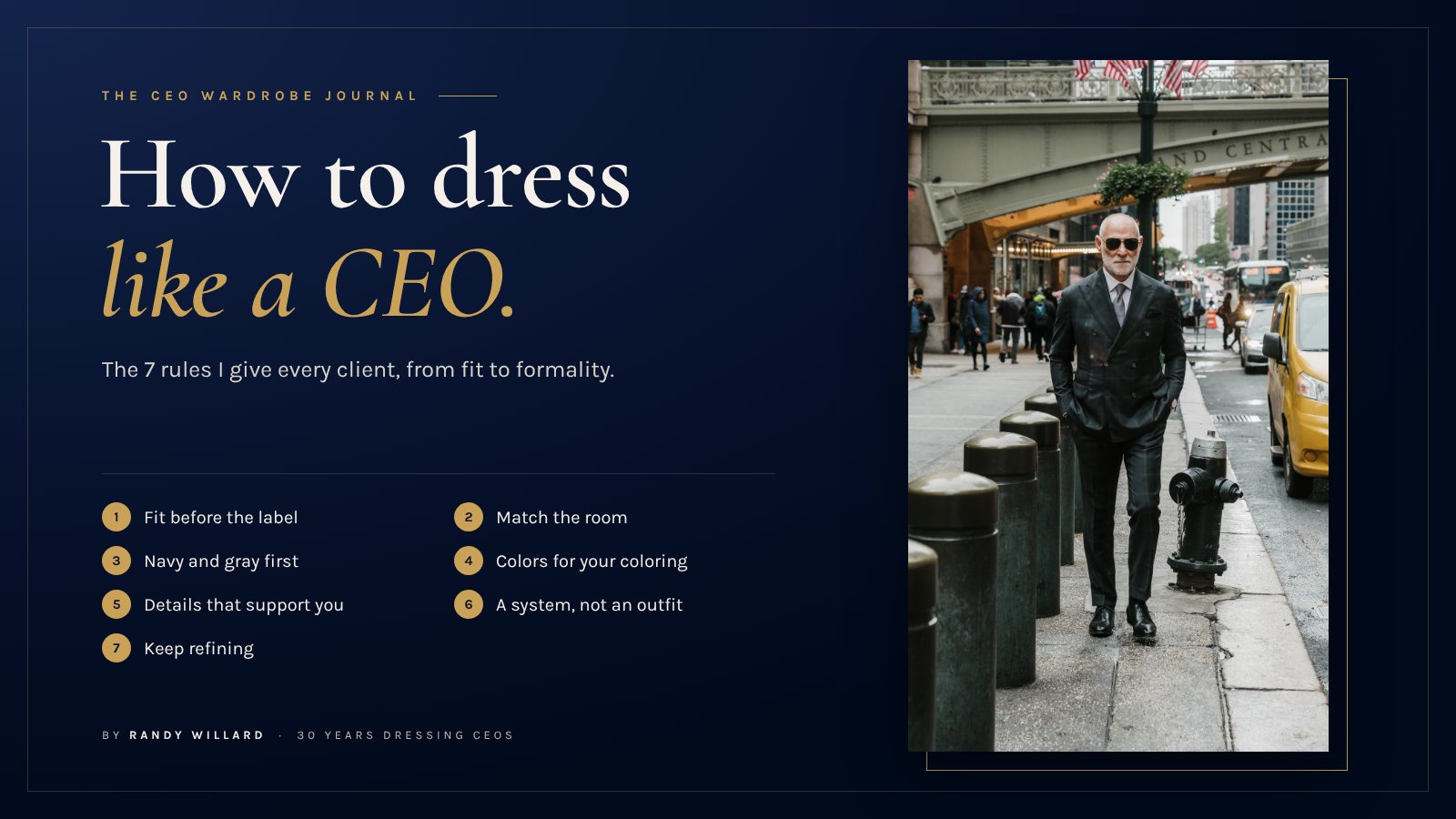
How to Dress Like a CEO: 7 Rules From 30 Years of Dressing Them
Nov 04, 2026By Randy Willard
You have never lost a room because of your clothing. You've just never been told.
Learning how to dress like a CEO isn't a question of money. Most men I meet have eight to fifteen thousand dollars of clothing hanging in the closet and four outfits they actually trust. That's not a spending problem. It's a buying problem.
I've spent thirty years in menswear and personally styled over a hundred Fortune 500 executives and CEOs, along with athletes and celebrities. These are the seven rules I give every one of them. You don't need the title to use them.
What dressing like a CEO really means
The room decides who you are before you say a word. That makes your clothing either an asset or a liability, and most men don't know which one they're carrying.
Show up to an important meeting one level too casual and you've told the room how seriously you take it. Show up to a client's dinner overdressed and you've told them something else. Show up to a wedding in the wrong thing and everyone notices, and nobody says a word to you about it.
Dressing like a CEO means you're never that man. You know what the room calls for, and you already own it.
Rule 1: Fit comes before the label
A suit is judged in about three seconds, and almost all of that judgment is fit. Not the brand. Not the price. Whether the jacket looks like it was built for the man wearing it.
Check these before anything else:
- Shoulders and collar. Get them right when you buy. They're the two things a tailor can't fix in any way worth paying for.
- The button test. Button the jacket with your hands by your sides. If you see shirt below the button, it's too tight.
- The cuff. About half an inch of shirt cuff should show below the jacket sleeve.
- The trouser. It should rest on the top of the shoe with a slight break.
Put on the suit you wear most and run through my free Perfect Suit Checklist. It takes minutes and tells you exactly what's working.
Rule 2: Match the formality of the room
Every invitation, meeting and dinner is asking for a level of formality. Your job is to answer it correctly.
- The most important rooms (an interview, a board meeting, a client you're trying to win): a business suit with a tie. A business suit looks finished with neckwear.
- Business casual: a sport coat without a tie. The jacket is what keeps it professional; without it, you're the polo guy.
- Black tie: a tuxedo. If the invitation says black tie, wear black tie. I cover every detail in the black tie dress code for men.
Rule 3: Build on navy and gray
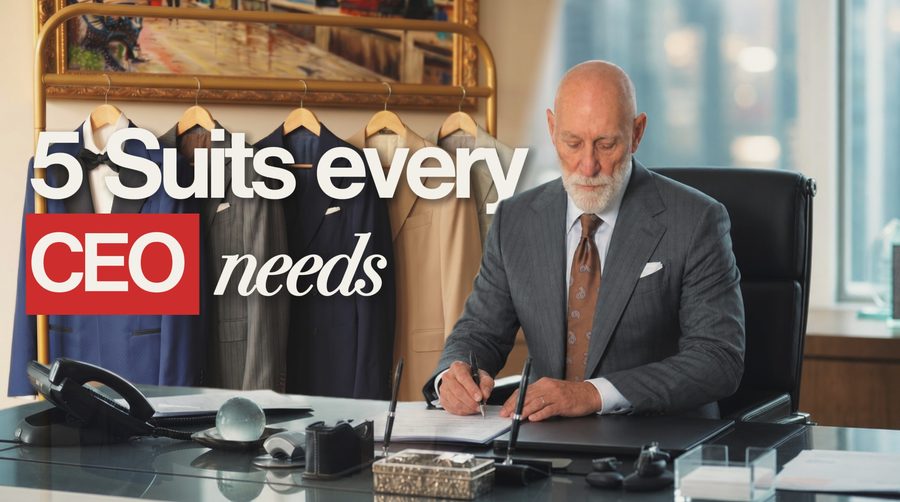
A solid navy and a business gray are the two suits every man should own for sure. From there, five colored suits cover a full work week: two business grays (a glen plaid and a pinstripe), a light gray, a navy and a summer blue.
Then come sport coats, the pieces that carry everything that isn't a suit. Navy and olive first, then more expressive colors and patterns.
The free CEO Masterclass walks you through the five suits every CEO needs, in the order to buy them.
Rule 4: Choose colors for your coloring
There's no single best suit color. It depends on your skin, your hair and your eyes. Navy, gray and black work for every skin tone, which is why they belong at the center of every wardrobe. Everything beyond them should be chosen for you, not for the mannequin.
Before your next purchase, take the free Suit Color Finder. Four questions, about two minutes, and you'll see the colors I would pick for you, ranked by occasion.
Rule 5: Let the details support you
I've met clients who could tie four different knots and fold a pocket square three ways, and they looked wrong. Completely wrong. Who cares how you tie a tie if you can't put the right combination together?
- Your tie should support the suit without competing with it. Look for a third color that lifts the outfit rather than matching everything.
- With a sport coat, choose a solid tie with texture and a flat finish, never a shiny suit tie.
- Your shoes follow the tie. With a tie, wear a lace-up dress shoe or a brogue. Without one, a loafer or another slip-on.
Rule 6: Build a system, not an outfit
Anybody can be styled once. That's a rental.
When I meet a new client, I don't start by selling him anything. I start with what he already owns and who he is. Then we build a wardrobe where the pieces work with each other on purpose, so business, black tie, client dinners, travel and the casual weekend are already solved before the occasion shows up.
That's the difference between owning good clothes and having a wardrobe. Done right, five outfits turn into twenty-five, and you open your closet knowing exactly what to put on.
Rule 7: Keep refining
I'm in my seventies, and I'm still refining my own wardrobe. Still learning. This is a skill, and unlike almost everything else you could spend your time on, it compounds. There's no point where you're too old for people to take you more seriously.
Where to start this week
- Put on the suit you wear most and run the free Perfect Suit Checklist.
- Take the Suit Color Finder before you buy anything new.
- Watch the free CEO Masterclass to see the five suits to build on.
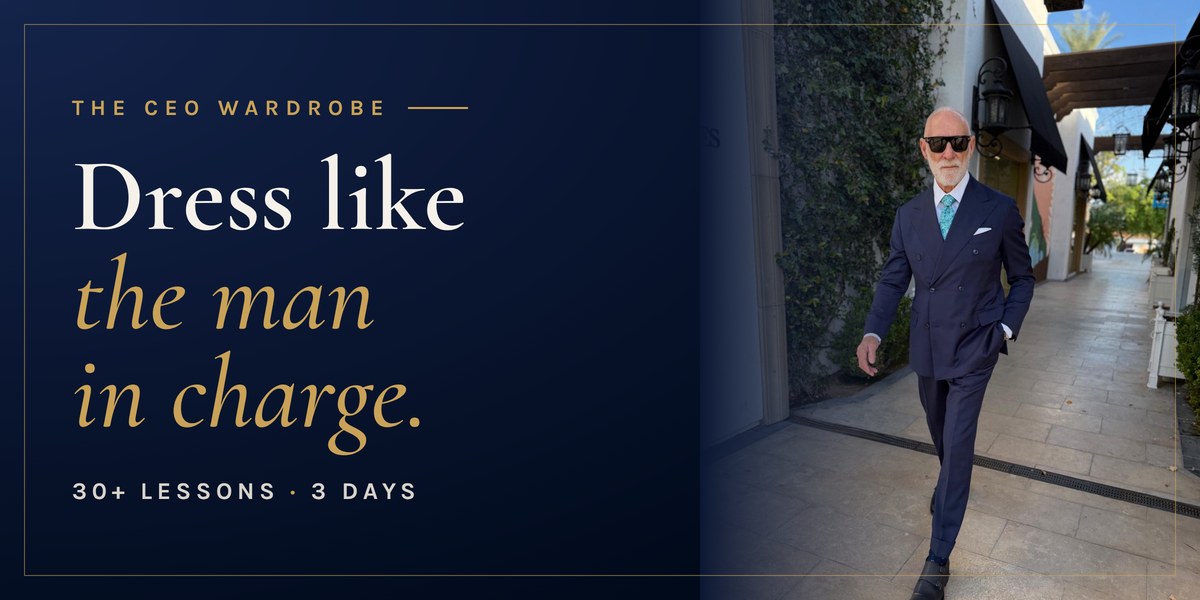
When you're ready for the whole system, The CEO Wardrobe covers fit, fabric, color, dress codes, accessories and the wardrobe itself in seven modules.
Frequently asked questions
What do CEOs wear to work?
It depends on the room. For the most important meetings, a business suit with a tie. For business casual days, a sport coat over trousers, chinos or well-finished denim, with no tie and a loafer.
Do you need expensive clothes to dress like a CEO?
No. Fit and the right combination matter more than the label. Most men already spend enough; they just buy the wrong things.
Which suit colors should a man buy first?
A solid navy and a business gray. They work for every skin tone and every serious room.
Should I wear a suit if my office is business casual?
Wear a sport coat. A sport coat without a tie is what business casual really means, and the jacket keeps you looking like the man in charge.
How many suits does an executive need?
Five colored suits cover a full work week, plus a tuxedo for black tie and a black suit for evenings that call for one.
Fit is the first decision. The CEO Wardrobe is the whole system.
Fit, cloth, color, shoes, neckwear and how it all goes together, taught in three days by the stylist who has dressed 100+ CEOs. It starts with what is already in your closet.
Get the Perfect Suit Checklist, free
The eight fit points I check on every client, with a short video for each. Enter your email and it opens on the next page.
We hate SPAM. We will never sell your information, for any reason.