How Should a Suit Fit? The 8 Points a Tailor Checks (and Most Men Miss)
Oct 27, 2026By Randy Willard
A suit is judged in about three seconds, and almost all of that judgement is fit. Not the brand. Not the price. Whether the jacket looks like it was built for the man wearing it.
I've spent thirty years building suits for CEOs, athletes and men who simply wanted to look right for the job. In every fitting I check the same things, in the same order. This is that list.
It breaks into three categories: fit, shape and balance. Most men only ever think about the first one. Get all three right and you own a suit that works for you in every room. Get one wrong and an expensive suit looks borrowed.
Randy's rule: if a jacket is wrong at the shoulders or the neck, it can't be fixed. Walk away, however good the price is.
Why your suit fights you
Your shoulder structure is different from the man standing next to you shopping for the same suit. A suit off the rack is built for one body type, and that's where the whole question of fit begins. Custom helps, but it doesn't solve it on its own. I see plenty of custom suits with the same mistakes, because nobody told the man what to ask for.
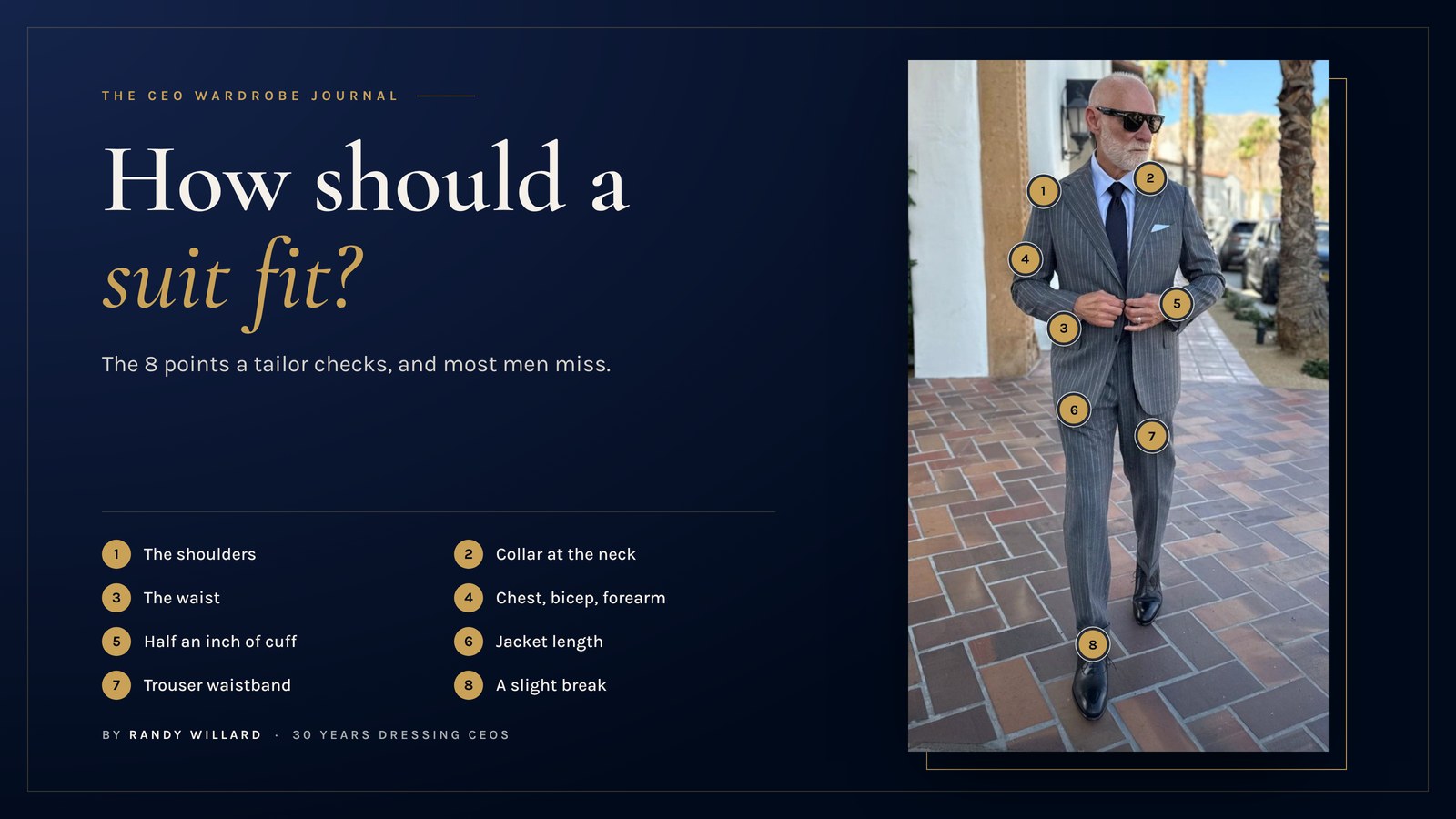
So here is what I look for, and what you should look for, the next time you reach for a suit. Stand in front of a mirror, hands by your sides, and go through these eight points in order.
The 8 points a tailor checks
1. The shoulders should hug you
The shoulder is where fit starts, and it's the one thing a tailor can't change. You want a slightly huggy feel, with the seam following your own shoulder line. Not square, not slumped.
How much padding depends on how you're built. If you're a shorter, boxier man, stay away from square, heavily padded shoulders. They only draw attention to what you don't want noticed. If you're slender, a structured shoulder is a strong, fashionable look. If your shoulders slope, as they do on many of my clients, a soft shoulder with a very small pad follows your line and looks current.
The mirror test: if the jacket makes you look too square, shy away from it. If the pad is so soft the whole jacket looks relaxed, shy away from that too.
2. The collar should sit against your neck
The jacket should hug your neck, with the shirt collar showing above it. You should see about half an inch to three quarters of an inch of shirt collar at the back.
If there's a gap between the jacket and your neck, or the jacket swallows the shirt collar completely, the suit is wrong for you. This is the one that can't be fixed, so it's the one I check first.
3. The waist should pull in, not pull open
Stand with your hands by your sides. The distance between the buttonhole and the button should be two to three inches. When you button the jacket, you should feel a slight draw-in at the sides. That's what gives you a silhouette instead of a box.
If the jacket is buttoned and you can see shirt below the button, it's too tight. If it hangs straight down with no shape, it's too loose. Get this one right and you're halfway to owning the perfect suit.
4. Room in the chest, bicep and forearm
It has become fashionable to wear everything skin-tight, and I see clothiers promoting it. Don't. A suit can be a strong, modern statement without a bicep that looks painted on.
You want room through the bicep and forearm so the sleeve falls naturally, with a slight teardrop shape that still gives you definition. Tight isn't fit. Tight is just small.
5. Show half an inch of shirt cuff
If you stand in front of the mirror pulling your jacket sleeves down because they feel short, stop. That has nothing to do with whether the sleeve length is correct.
The rule is simple: show about half an inch of shirt cuff. Men with longer arms are often self-conscious and want the sleeve down near the palm. It's an ugly look, and it ruins the silhouette, because the shirt sleeve disappears. The shirt collar should show at the neck and the shirt cuff should show at the wrist.
If you wear French cuffs, leave a little more room at the bottom of the jacket sleeve so it doesn't catch the cuff.
6. Jacket length has to match the trousers
This is balance, and it's the hardest thing to get right. The length of the jacket has to complement the pant you wear with it. A skinny, tapered trouser calls for a slightly shorter jacket. A longer jacket needs a trouser with some flow.
The mistake I see most often is on custom suits: the man asks for a longer jacket because that's what he likes now, but keeps the skinny trouser because he wants to look fit and young. The two fight each other, and the whole suit looks off.
7. The trousers sit on the hip bones
The waistband should sit where your hip bones connect. Don't go higher. It isn't necessary. Let the trouser sit where it wants to sit.
8. A slight break at the shoe
The trouser should rest gracefully on the top of the shoe with a small break. I'm not twenty years old, so I don't need the short, skinny, ankle-baring length, and if you're reading this you probably don't either. It reads as trying too hard. You're searching for balance, not a trend.
Fit is half the job. Shape is the other half.
The shape of your suit matters as much as the fit, because each one compliments the other. Shape comes from three places: the bicep, the armhole and the chest. Get those right and the jacket has a silhouette. You can feel it when you button up: a little tug in the middle, a curve at the sides, instead of a square box all the way around.
Then balance ties it together. Jacket length to trouser. Trouser to shoe. Shoulder to sleeve. None of these decisions stands alone, which is why a suit can pass every measurement and still look wrong.
The honest truth is that the perfect suit is almost never out there waiting for you. It's built, piece by piece, by paying attention to these things and refusing the ones that are off. That's the difference between a man who owns suits and a man who looks like he does.
Check the suits you already own
You don't need a new suit to use this. Take the ones in your closet, put each one on, and run the eight points in front of a mirror. It takes two minutes a suit.
Most men find a jacket or two they should stop wearing, and a couple they've been underusing because one thing was off and they never knew what. The second group is where a good tailor earns his money: waist suppression, sleeve length and trouser break are all easy fixes. Shoulders and collar are not.
And if you're wondering which suits belong in a complete wardrobe in the first place, I walk through the five suits every CEO needs in my free CEO Masterclass.
If you want the list in your pocket while you do it, the Perfect Suit Checklist is free. It's the same eight points, with a short video for each.
What fit can't fix
A suit that fits perfectly can still work against you. The wrong color washes you out. The wrong cloth looks heavy in July and thin in January. The wrong shirt collar undoes a good lapel. Fit is the first decision, not the only one.
If you're not sure which colors are yours, the Suit Color Finder takes four questions and gives you the answer.
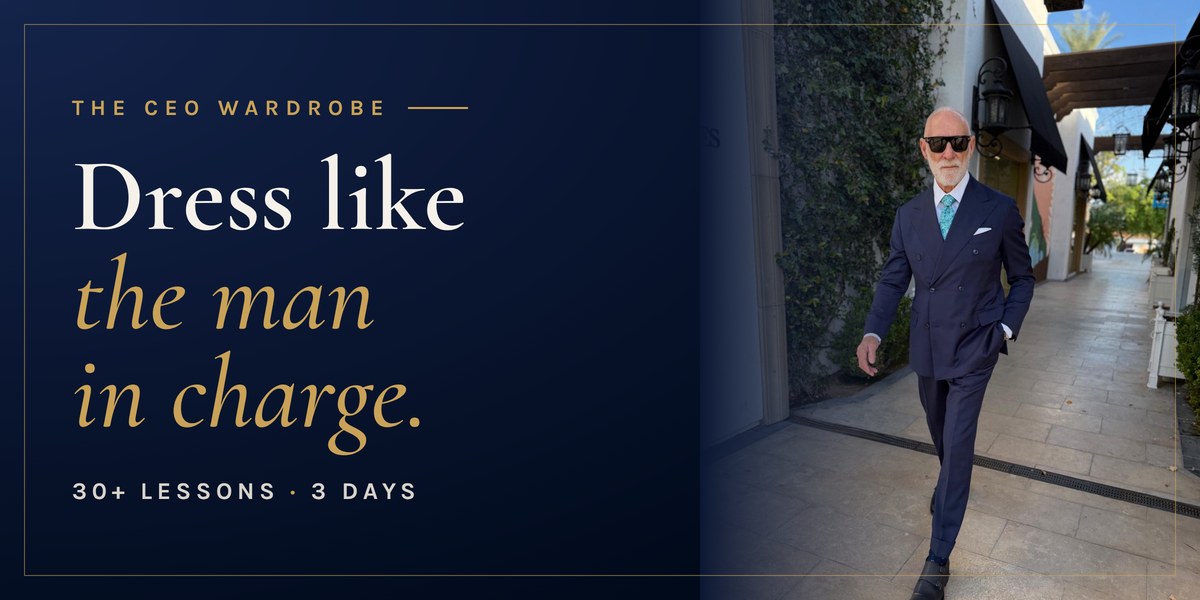
And if you'd rather have the whole system, fit, cloth, color, shoes, neckwear and how it all goes together, that's what I built The CEO Wardrobe for. Three days, starting with what's already hanging in your closet.
Frequently asked questions
How much shirt cuff should show below a suit jacket?
About half an inch. If you wear French cuffs, have the jacket sleeve finished with a little more room so it doesn't catch the cuff.
How do I know if a suit jacket is too tight?
Button it with your hands by your sides. If you see shirt below the button, or the bicep and forearm have no room to fall naturally, it's too tight. A fitted jacket draws in slightly at the waist; it doesn't pull.
How much of the shirt collar should show at the back?
Half an inch to three quarters of an inch, with the jacket collar sitting against your neck. A gap there can't be tailored away.
Should suit trousers have a break?
Yes, a slight one. The trouser should rest on the top of the shoe. The short, ankle-baring length is a trend for twenty-year-olds, not a rule for men with authority.
Can a tailor fix the shoulders?
Not in any way worth paying for. Shoulders and the collar are the two things to get right when you buy. Waist, sleeve length and trouser length are the easy alterations.
Fit is the first decision. The CEO Wardrobe is the whole system.
Fit, cloth, color, shoes, neckwear and how it all goes together, taught in three days by the stylist who has dressed 100+ CEOs. It starts with what is already in your closet.
Get the Perfect Suit Checklist, free
The eight fit points I check on every client, with a short video for each. Enter your email and it opens on the next page.
We hate SPAM. We will never sell your information, for any reason.