How Many Suits Should a Man Own? Six Suits, a Tuxedo and Ten Jackets
Oct 28, 2026By Randy Willard
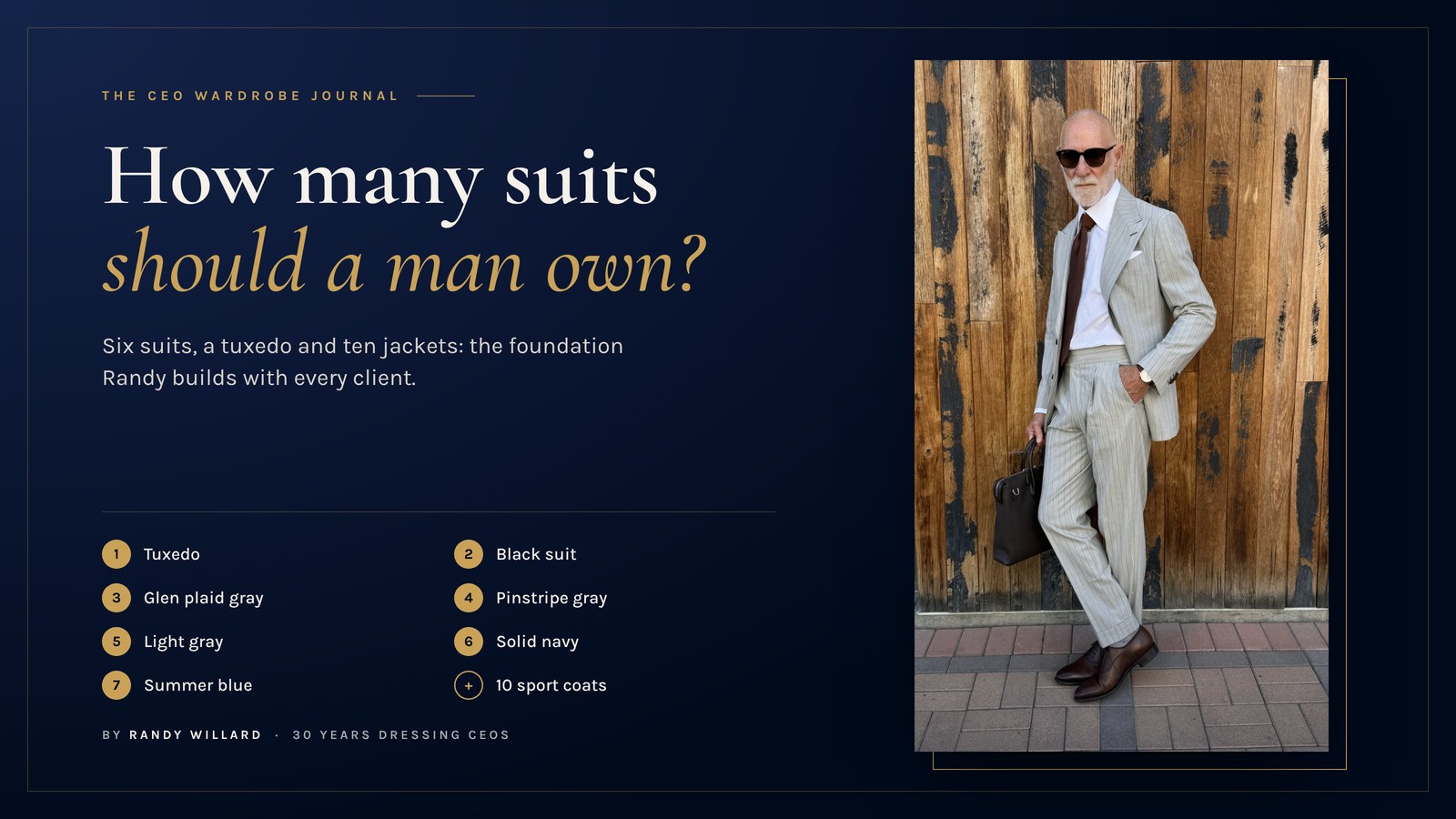
How many suits should a man own? Six, plus a tuxedo. That's the foundation I build with every client, whether he runs a company or is just starting to take his appearance seriously. Add ten sport coats and half a dozen dress trousers, and your closet stops being a closet. It becomes a wardrobe.
Most men ask the question because they want a number they can stop thinking about. The number matters less than what each piece is for. Every suit on this list has a job, so when the moment arrives (the board meeting, the summer wedding, the gala) you already know what to reach for.
Randy's rule: If you want a wardrobe and not just a closet, you need the right number of pieces in it to give you options when it matters.
The foundation at a glance
| # | Piece | Color and pattern | Where you wear it |
|---|---|---|---|
| 1 | Tuxedo | Black | Galas, award ceremonies, black-tie evenings |
| 2 | Black suit | Solid black | Black tie optional, evening events |
| 3 | Business gray | Glen plaid | Client meetings and everyday business |
| 4 | Dark gray | Pinstripe | Business days and the board room, not the cocktail party |
| 5 | Light gray | Solid or shadow stripe, lighter cloth | Summer weddings, spring and summer events |
| 6 | Navy | Solid | Church, the bank, days you don't want attention |
| 7 | Summer blue | Light blue | Summer weddings and outings |
That's seven pieces: one for black tie, one for the evening, three grays and two blues. Here's why each one earns its place.
Why the tuxedo comes first
Before we even get to suits, there's black tie. It's the biggest stumbling block I have with clients. They look me in the eye and tell me they don't really dress up for black-tie occasions anymore. They need suits, they need sport coats, they don't need a tuxedo.
Here's what I tell them: the reason you don't go to those events, and the reason you don't look like a million dollars when you do, is that you don't own one. Black tie is a man's finest hour. If you're building a CEO wardrobe, a wardrobe that means something for your life, it starts here. Once it's in your closet, you'll find the award ceremonies, winter galas and black-tie evenings to wear it to. It isn't just for weddings and the Academy Awards.
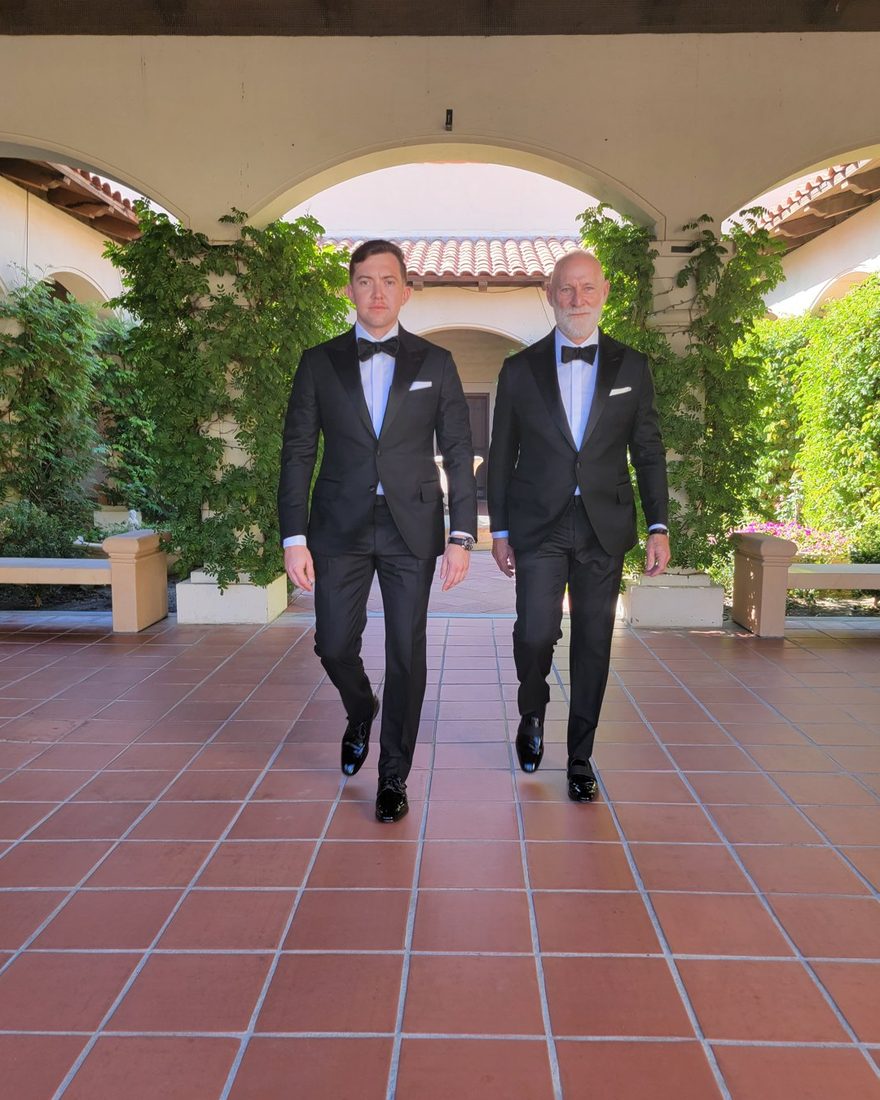
When you buy one, stay traditional:
- One button, or double-breasted. A single-breasted tuxedo gets one button, not two; two buttons belong on a sport coat. A double-breasted tuxedo is the more modern, stronger look.
- Tie your own bow tie. A hand-tied bow tie has an irregular shape, and that gives it character. Leave the pre-tied ones at the department store.
- Plain-bottom trousers, always. Never cuffs on a tuxedo. I prefer a pleated trouser with a two-inch waistband, and I skip the cummerbund and the suspenders for a cleaner finish.
- Finish it properly. French cuffs, cufflinks, a pocket square and a high-gloss tuxedo shoe. I prefer a lace-up to a slip-on; it's the finer evening look.
I go through every black tie detail, and when a black suit will do, in Black Tie Dress Code for Men.
Yes, you need a black suit
The second piece is a basic black suit, for the moments when a tuxedo isn't required. We're invited to more and more gala events where the invitation says black tie optional, and a black suit handles every one of them.
Dress it up with a bow tie, wear it with a regular tie, or go open collar, whatever turns your screws. But it belongs in your closet as a foundation piece. Think of it as your evening suit.
It's also the one suit I don't mix and match. Keep a black suit straightforward: a French cuff shirt, cufflinks, a dressy tie or a bow tie, and a white pocket square in a presidential fold. It's more of a James Bond approach, and it works because you don't wear a black suit that often.
Two grays for business, one for summer
After black tie and black, there are two colors every man should have for sure: gray and blue. Start with gray.
My business gray is a glen plaid. When I want to dress up in a business way, the glen plaid does the job better than a plain solid. My second gray is a little darker, a pinstripe. That's the classic business suit, and it works amazingly well, but it's for the business day, not the cocktail party. Between the two, I have two business looks I can wear at a moment's notice.
Then a lighter gray for spring and summer. A shadow stripe with a silver finish is perfect for a summer wedding, especially with neckwear, and you can change the whole feel of a light gray just by changing the tie.
One gray suit, three looks
This is why the grays earn their place. Take a gray pinstripe:
- Strong business: silver gray that pulls out the pinstripe. You can wear it anywhere, any time, even to church or a very important occasion.
- Softer: pick up the pinstripe in a very soft gray and add some green, which warms up the tones of the suit. A cap-toe lace-up keeps it businesslike.
- More of a statement: a little stripe action in the tie, balanced by a plain, soft-colored shirt, and an infectious brown brogue. Anyone who tells you a dark suit only takes a black shoe hasn't tried it.
Navy, and a blue with some life in it
Solid navy is the straightforward suit. You wear it to church, to the bank, anywhere you don't want to bring a lot of attention to the table. It's easy to wear. It can also be a little boring, which is exactly why it shouldn't be your only suit.
You can fire it up, though. For business, I wear navy with an ivory shirt instead of white, which softens the whole presentation, and finish it with a brown shoe. To dress it up, I switch to a white shirt, a bold striped tie, a white pocket square and a black cap toe. Same suit, a completely different outfit.
Then add a summer blue. You get invited to a summer wedding or an outing and you want to show a little life. A lighter blue does that without trying too hard.
Two checks before you buy any of these. First, fit: a suit that's wrong at the shoulders or the collar can't be saved, whatever the color. My free Perfect Suit Checklist gives you the eight points I check on every suit. Second, color: if you're not sure which grays and blues flatter you, take the free Suit Color Finder.
What your suits should be made of
Fit, shape and balance all depend on the cloth, because cloth moves differently depending on its weight and blend. Same cut, same measurements, different cloth, and the suit fits differently.
| Season | Cloth | Weight |
|---|---|---|
| Spring and summer | Linen, cotton, cotton-linen and wool blends; a little silk adds body to a light jacket | 7 to 9 oz |
| Fall and winter | 100% wool for suits; heavier cottons such as corduroy for jackets | 9 to 10 oz |
| Outerwear | Anything heavier stops being a suit | Over 11 oz |
Ten ounces is my favorite weight for a wool suit. When a fit looks spot on, it's usually because the cloth has the right weight. Heavier cloth also travels better; it's practically bulletproof against wrinkles. In summer I'll accept a little wrinkle in exchange for a suit that breathes. My preference is a cotton-linen blend, which breathes nicely and wrinkles less than pure linen. And a few wrinkles build character.
How many sport coats? Ten.
Sport coats are where most men have the most fun with their appearance today, because they can wear them so often. I start every client with the number ten. Here's how I'd build them:
- Navy first. The navy blazer is the foundation jacket. Wear it with gray trousers, desert tan or ivory. Crest buttons or patch pockets give it personality, and a broader lapel dresses it up. Could you choose black instead? You could. I'd choose navy every time. It's also the least exciting jacket you'll own, which is why it's only the first of ten.
- Then olive. An olive green glen plaid is my idea of business casual. From there, work your way into more expressive colors.
- A darker jacket you can wear with a tie, or throw over summer trousers or a pair of jeans.
- A double-breasted jacket. You never have to convince me to put on a double-breasted coat, because it says I'm here. Most men are afraid of it. Mine is red and navy, and I wear it with denim or dress it up. Learn to let go, explore and discover.
- An unstructured jacket in a light color. Mine is pink. Most men are afraid of a color like that. I wear it and look as masculine as any man on the planet; it's what you do with it that matters. Wear a light jacket into the right restaurant on a summer evening and your martini might just be free. I know, because mine have been.
- A bold pattern you'll love, like a green windowpane. I love earth tones that mix with green.
- A desert tan that goes anywhere in the country, any time.
- A coat that goes everywhere. The one you throw over whatever you have on and you're out the door, finished. Wear it to a business meeting, or put it with dark denim and boots for a night out in Nashville.
- A travel jacket you can stuff in the overhead bin that still looks the same when you land.
Don't make them all dark. We don't want boring written all over our jackets. Have summer options too, or you'll walk around looking like the t-shirt guy, or the polo guy who just came off the golf course. Split the ten by climate: about 30 percent for cold weather, since winter only lasts three or four months, and 70 percent for spring, summer and year-round wear.
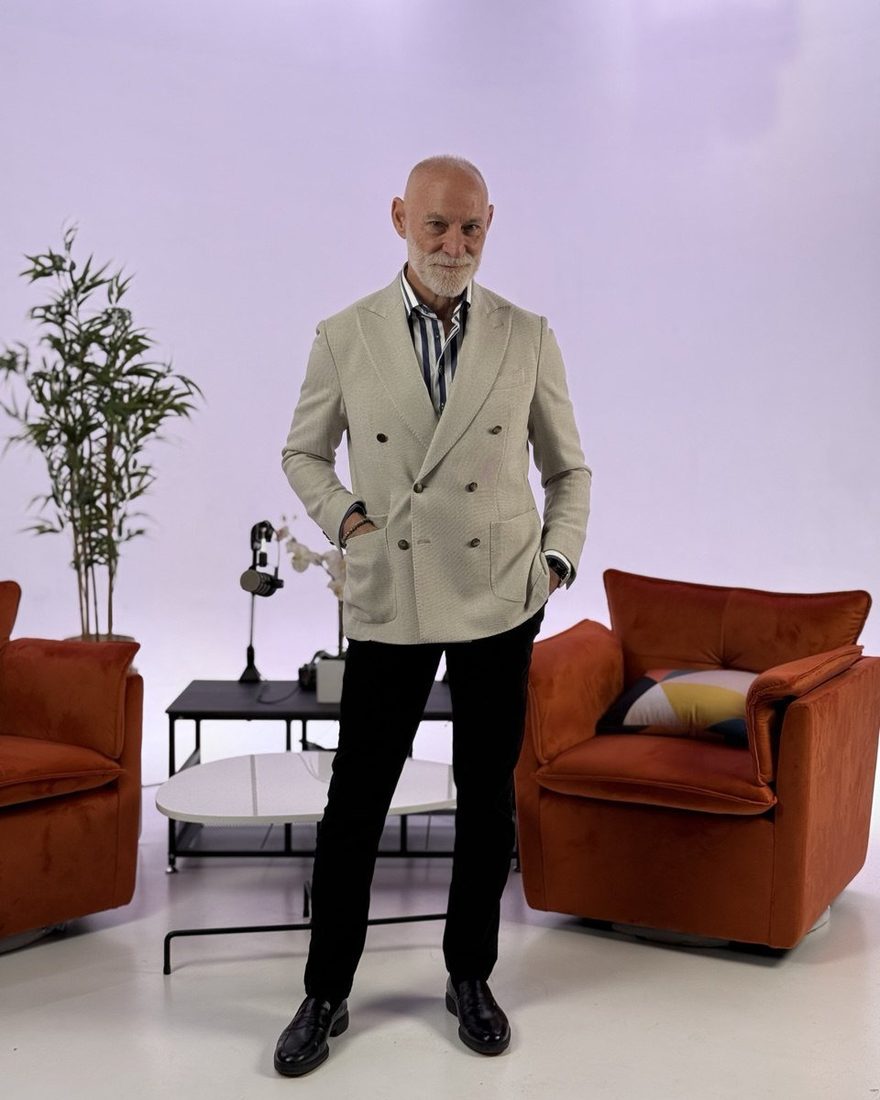
And buy the jacket that surprises you. Some jackets look far better on than on the hanger. The one you thought you'd rarely wear becomes your favorite, because it goes to far more places than you expected.
Trousers and denim
You don't need a lot of dress trousers. Half a dozen will do: gray, navy, maybe a brown and a desert tan, each one able to work with every jacket you own. If you've never worn an ivory chino, try one.
And who doesn't love denim? Just not grungy denim. This is where most men fail: they put on a great sport coat and ruin it with the wrong jeans. Reach for a better-finished denim, look for summer weights (often blended with linen or silk), and add a light-colored five-pocket pant for the warm months. A navy blazer, light trousers and a loafer is a look you can wear almost anywhere.
Before you buy: clear out the closet
The first step isn't shopping. Put on what you own and stand in front of the mirror. If you love it, hang it back up. If you don't, it goes in the pile. Keep only what looks amazing on you, even if it's just a t-shirt. Everything else takes up space and clutters your head, so when you get dressed you're staring at too many possibilities. That's why most men never step up their game.
Then learn to let go of the voice that says I don't wear this, I never wear suits, I don't have a reason. Once you stop saying no first, you start reaching for colors, patterns and pieces that change how people see you.
Build it, then keep building
You don't buy all this in a weekend. Start from where you are and fill in the pieces over time. When all of them are in play, you can officially call your closet a wardrobe.
The biggest mistake comes next: turning your back on it once the main pieces are in. Having a successful wardrobe is work. Keep discovering, adding, letting go and developing. Most men won't sign up for that. They'd rather look regular seven days a week. I want to be infectious to the people I meet, I want to lead, and I want to show that I care. Your wardrobe says that before you say a word.
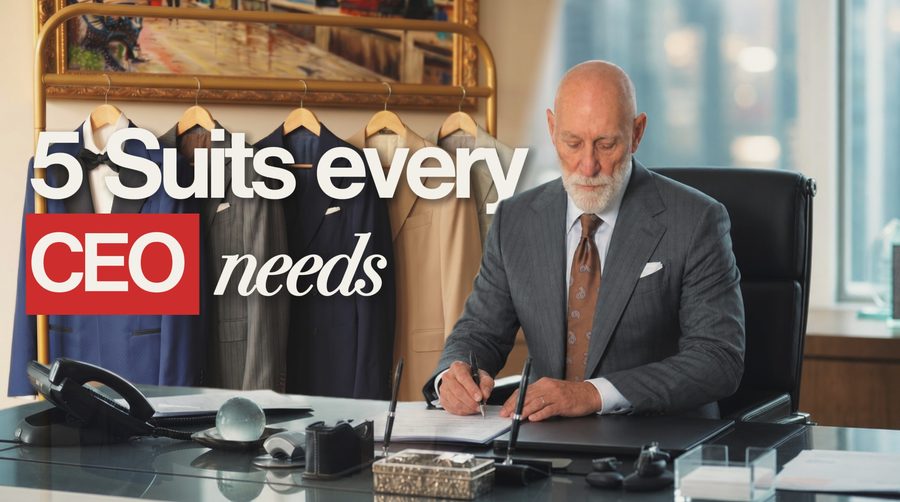
If you'd rather watch it than read it, my free CEO Masterclass walks you through the five suits every CEO needs.
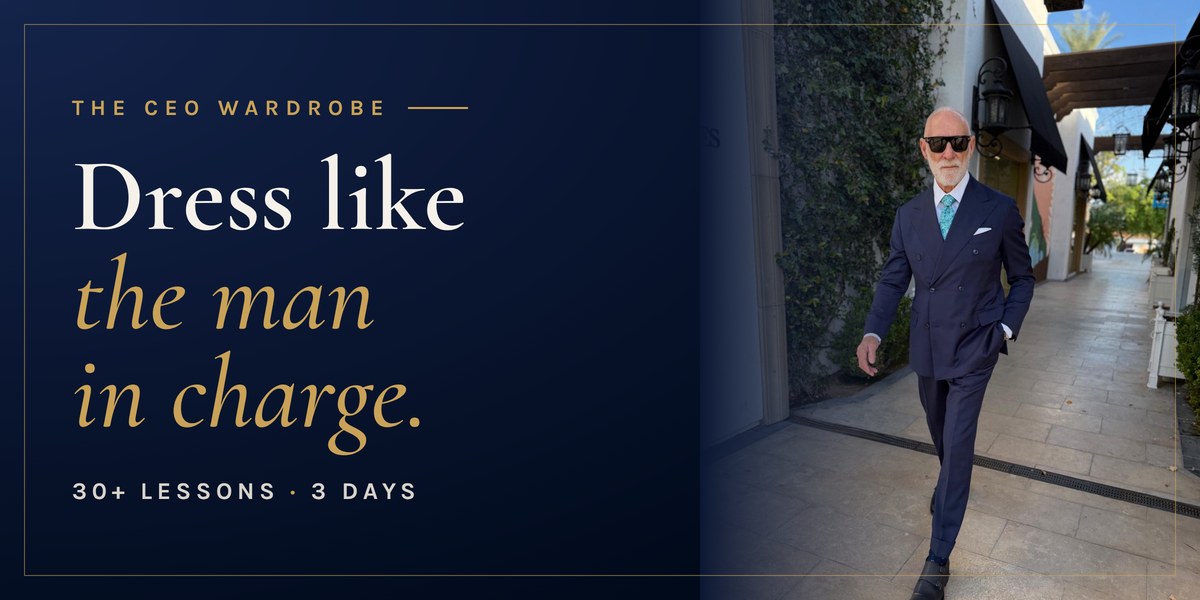
That's the system I teach in The CEO Wardrobe: the foundation, the fit, the cloth, the color and how it all goes together, starting with what's already in your closet.
Frequently asked questions
How many suits should a man own for work?
Five colored suits cover a full work week: two business grays (a glen plaid and a pinstripe), a light gray, a navy and a summer blue. Sport coats and trousers cover the days that don't call for a suit.
What color suits should a man own first?
Gray and blue. A solid navy and a business gray are the two colors every man should have for sure.
Should a man own a black suit?
Yes, as an evening suit for black-tie-optional events. Wear it with a bow tie, a regular tie or an open collar.
Does every man need a tuxedo?
If you want to look your best at the moments that matter most, yes. Most men who say they never go to black-tie events don't go because they have nothing to wear.
How many sport coats does a man need?
Ten: navy and olive first, then more expressive colors and patterns, with about 70 percent for spring, summer and year-round wear.
What weight should a suit be?
About 10 ounces of wool for fall and winter, and 7 to 9 ounces of linen, cotton or a blend for spring and summer. Over 11 ounces, you're into outerwear.
Fit is the first decision. The CEO Wardrobe is the whole system.
Fit, cloth, color, shoes, neckwear and how it all goes together, taught in three days by the stylist who has dressed 100+ CEOs. It starts with what is already in your closet.
Get the Perfect Suit Checklist, free
The eight fit points I check on every client, with a short video for each. Enter your email and it opens on the next page.
We hate SPAM. We will never sell your information, for any reason.